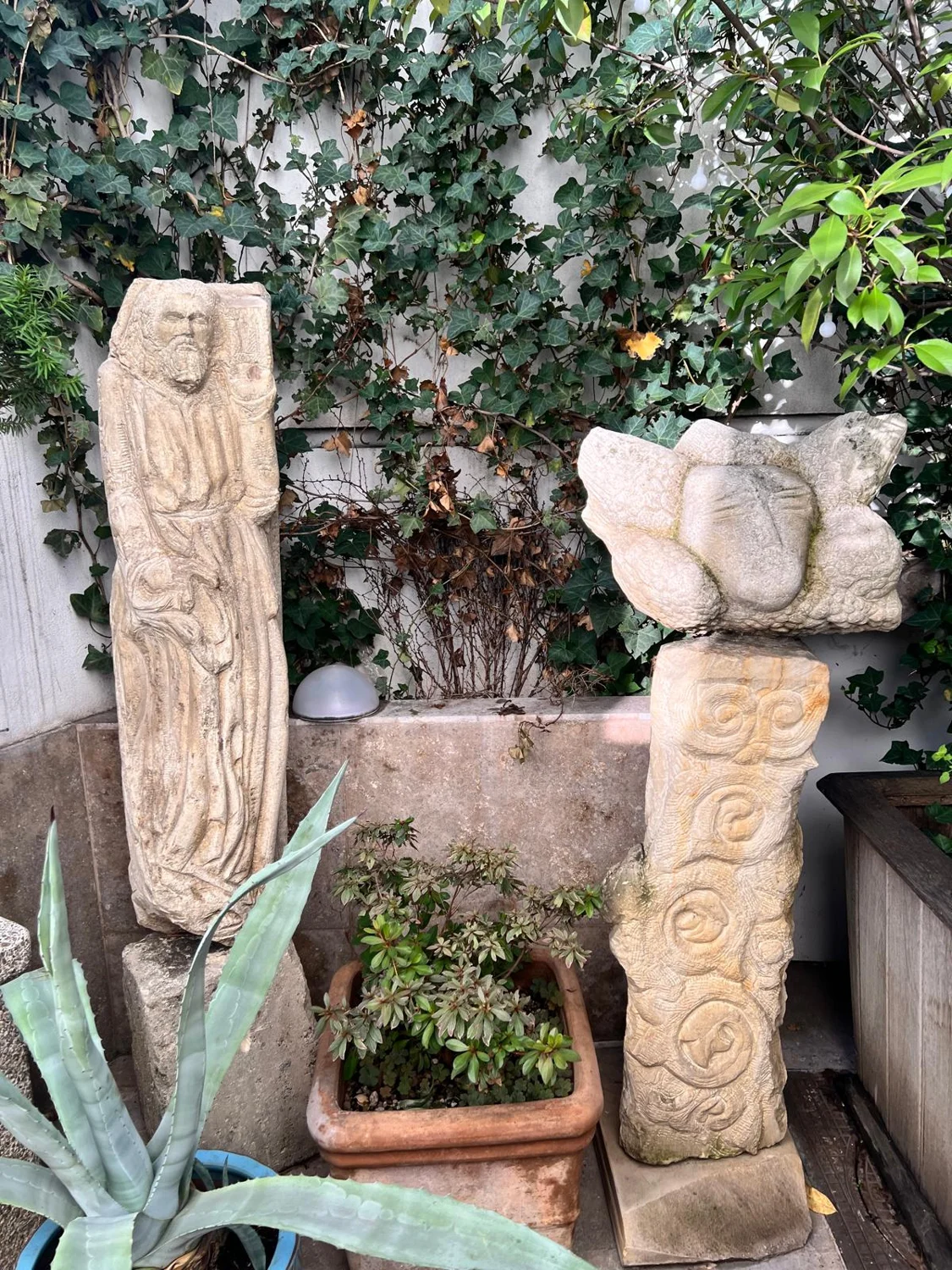
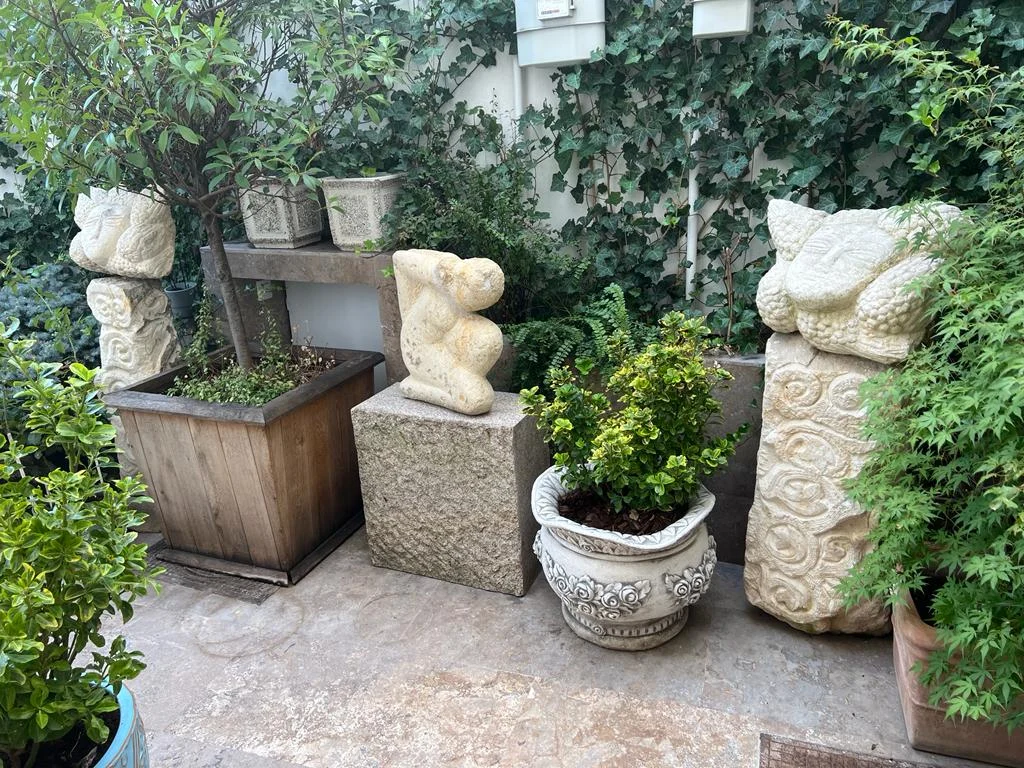
Discover Bucharest’s history through the people who lived in this residence on Știrbei Vodă Street. For guests interested in heritage travel and cultural tourism, T. Nicolau Exclusive Art House Stay offers accommodation in a historic house in central Bucharest, bringing architecture, the memory of the place and contemporary art together within a private stay.
TN19TH CENTURY / THE ORIGINS OF THE NAME
Tănase Nicolau
The name T. Nicolau Exclusive Art House Stay pays tribute to the residence’s origins and to Tănase Nicolau, whose name remains linked to the identity of the house. Today, that connection continues in a place where historic architecture meets contemporary art.
According to the historical record compiled by Theo Ulieriu-Rostás for Laboratorul de memorie urbană, Tănase Nicolau is documented as owner in 1870.
The Wikipedia article Romanian architecture illustrates and lists the building as “Tănase Nicolau House”, dated 1870, with an unknown architect. This historic name connects the former residence with today’s live-in art gallery.
Reference: Wikipedia, “Romanian architecture”, “Residential architecture” section. The study also cites ANDMB, PMB Tehnic collection, file 31/1870, folio 188.
Dated to around 1860, the house belongs to the period when Bucharest’s architecture and urban life were changing after the Union of the Principalities. Tănase Nicolau, documented as owner in 1870, remains the figure who gave it its name. The 1870 redecoration of the façade reflects the eclectic tastes of the period, combining a Neoclassical composition with Rundbogenstil accents.
CK19TH CENTURY / MILITARY HISTORY
Colonel Kirițescu
Recorded as a tenant in 1886–1887, Colonel Kirițescu (also recorded as Kirțiescu) commanded the 2nd Cavalry Brigade. His presence connects the house with Bucharest’s military history and the officers of the Royal Romanian Army.
For travellers interested in the figures of historic Bucharest, this record offers another perspective on life in the residence during the 19th century. The source identifies him as a tenant, distinct from the owners of the property.
Laboratorul de memorie urbană ↗
IS19TH CENTURY / URBAN ENGINEERING
I. Seber
Recorded as a tenant in directories from 1888–1889 to 1897–1898, I. Seber was a contractor for artesian works, a field associated with drilling artesian wells and accessing groundwater.
His presence in the residence brings technical enterprise and the trades that accompanied Bucharest’s modernisation into the story of the house. For guests interested in cultural travel, the history of the place also opens a window onto urban engineering in the late 19th century.
Laboratorul de memorie urbană ↗
VG20TH CENTURY / MEDICINE & CULTURE
Dr Victor Gomoiu
Owner of the house circa 1937–1950, Dr Victor Gomoiu (1882–1960) is one of the notable figures associated with this residence. A surgeon, medical historian and former Minister of Health in 1940, he was among the pioneers of the study of Romanian medical history.
In 1923 he published Din istoria medicinii și învățământului medical românesc. He helped establish the Romanian Society for the History of Medicine in 1929 and organise the international congress on medical history held in Bucharest in 1932. His work connected medical practice with research, heritage and culture.
His connection to the residence adds another dimension to a heritage stay in Bucharest. A visit to T. Nicolau Exclusive Art House Stay invites guests to discover this legacy alongside its contemporary art gallery and the city’s cultural landmarks.